WARDOGS Black Market and Player Trading — What We Know
WARDOGS' announced Black Market, Vault, and player-to-player trading system — design intent, expected features, and what is not yet shipping with Early Access.
FAQ
Does the WARDOGS Black Market launch with Early Access?
Can you trade items with other players in WARDOGS?
What is the Vault in WARDOGS?
Can you buy gold bars with real money in WARDOGS?
What are Player Skills in WARDOGS?
Is the Black Market in WARDOGS at launch?
No. Bulkhead has been explicit that the Black Market, the Vault, and Player Skills are design intent that will be built during Early Access, not features that ship on day one. The closed beta exposed a frontend with four tabs — Gold Market, Investments, Unlocks, and Missions — and only the Gold Market tab was functional. Every other system described below is being built across Early Access, which is expected to run one to two years.
That disclaimer matters more than usual here: a wiki page that documents unreleased features as if they were live is the kind of soft-404 that gets the site into Google trouble. We will move each section from “announced” to “shipping” the moment Bulkhead confirms the corresponding build is live.
What is the Black Market supposed to do?
The announced Black Market is not a single shop — it is a set of four interlocking systems. Each one is described below in the framing Bulkhead has published, with the source caveat that none of it is shipping yet.
Arms dealers
Arms dealers are NPC smugglers you can bribe to move weapons and ammunition between sessions — meaning into the persistent economy described in the money guide. The mechanic is announced, not detailed: how often you can call a dealer, what they charge, what items they can move, and whether they have cooldown rules have all been left for an EA build.
Wagers
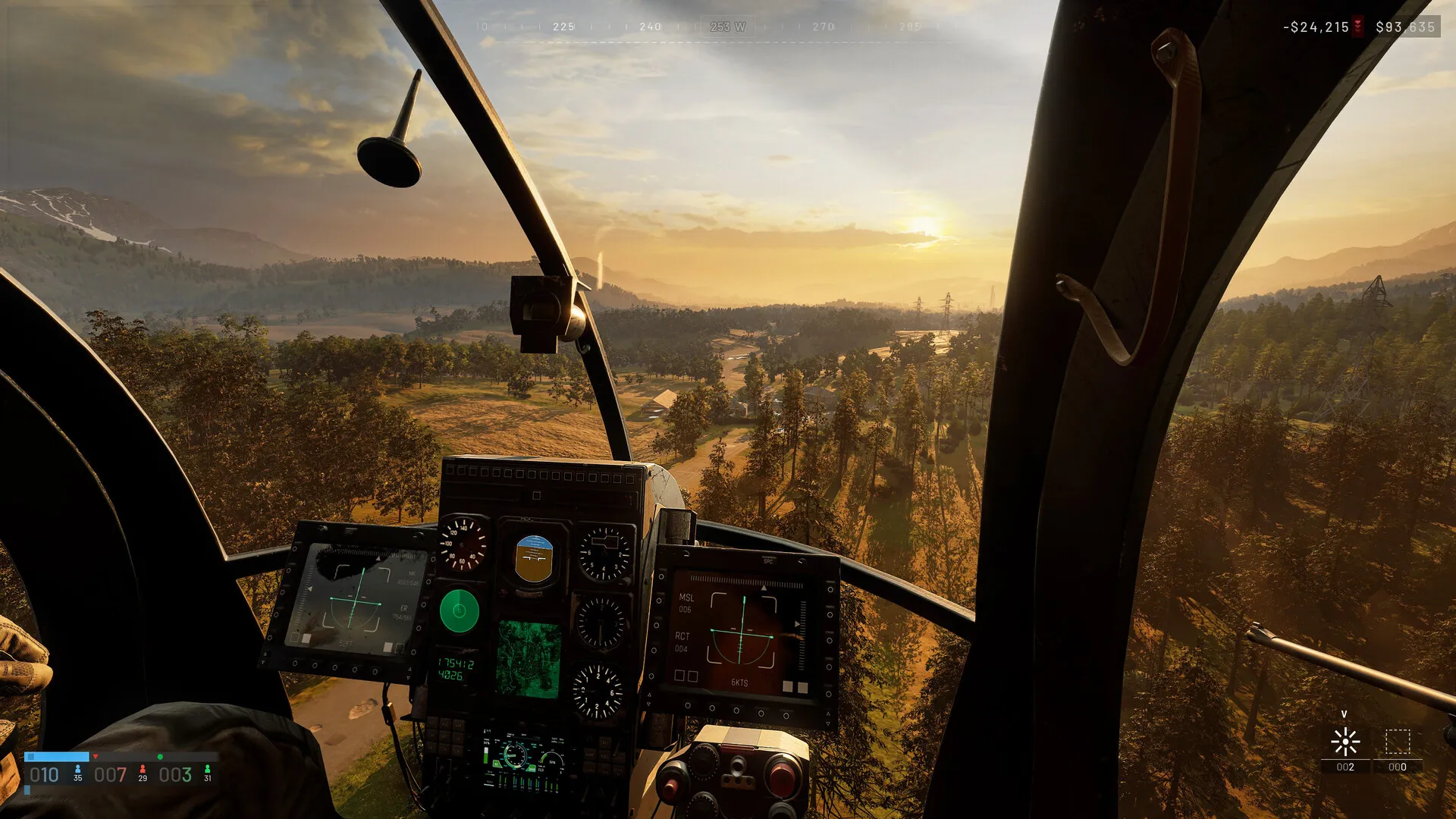
Wagers let you bet on your own next match — for example, staking that you will land 10 kills in one life. Win the wager, and you collect a cash payout out of the persistent wallet. Lose it, and you forfeit the stake. The mechanic is the most concrete of the four because the underlying wallet already exists; wagers are effectively a bet placed against your own future in-match performance. As of the Season 02 Preview (October 9, 2026), wagers are also the first of the four with itemized mechanics: an in-match Wager Vendor — pick your objectives, set your stake, watch the live tracker above the minimap — as an explicitly experimental feature the studio may pull mid-season if it proves too exploitable. One correction from the Season 2 patch notes (October 14, 2026): the vendor does not open with the season — it is not available at Season 2’s October 15 launch and arrives later in the season, with no date attached. It is the wager loop alone, not the full Black Market: no trading, no Vault, no out-of-match layer.
Businesses
Businesses are announced as cash investments you can fund, upgrade, and that produce items between sessions. Mechanics-wise, the closest parallel is a passive-income loop: you put cash in, time passes, you take items out. The exact production rates, the upgrade tree, and the items produced are all unpublished.
Manufacturer buyouts
Manufacturer buyouts are the endgame of the Black Market loop: you buy out a weapon or vehicle manufacturer, and once you own the line, you can produce its loadouts cheaper than the in-match vendor. Combined with the player reselling below, this is the system that turns persistent cash into a sustainable competitive edge.
How does player-to-player trading work?
The only confirmed player-to-player trading mechanism is mid-match reselling via supply crates. Here is how it is announced to work:
- During a match, you can list items for sale through a supply crate system.
- Other players in the same match can buy from you.
- You set your own markup or undercut competitors doing the same.
The implication is that the supply crate is a portable vending machine rather than a peer-to-peer transfer: there is no published mechanism for moving items directly from one player’s Vault to another player’s Vault. If you produce a weapon cheap via manufacturer buyouts and want to move it to a friend, the announced route is to list it in a supply crate at a markup and have them buy it back from you.
Direct peer-to-peer transfers between vaults are not confirmed. Treat any source claiming otherwise with skepticism until Bulkhead publishes the system.
What is the Vault?
The Vault is the storage layer under the Black Market. Announced mechanics:
- It stores Black Market purchases so they survive between sessions.
- It has a capped, upgradeable capacity. The closed beta started vault capacity at zero — players literally had to buy or level their first slot to use the system at all.
- Vault items are redeemable for free in future matches, so the Vault is a stockpile of gear you have already paid for once.
The capacity rule has a real consequence: there is a published in-game error message reading “There is no available space in your vault.” That error appeared in the closed beta because the default starting capacity is zero, and it is the cleanest single piece of evidence that the Vault-as-capped-storage mechanic is real and shipped — even if the items it stores are still being added.
What are gold bars and the Gold Market?
Gold bars are WARDOGS’ second persistent currency, sitting on top of cash. The announced economics:
- Cash converts to gold bars through a Gold Exchange whose rate fluctuates daily.
- Gold bars are permanent — they survive season resets, while cash does not.
- The Gold Market sells cosmetics only: weapon skins at 10–15 bars, emotes at 5 bars.
- Gold Market unlocks are permanent on your account and cannot be bought with real money.
The closed beta observed a single published exchange rate of roughly $266,246 per gold bar on 22 August 2026 — useful as a magnitude, not a forecast: the rate fluctuates daily by design, and Bulkhead has framed the timing as a “invest now or buy in the dip” choice on login.
Gold bars only become meaningful once you have a steady income stream to convert — the practical recipe for that is on the making money guide.
What are Player Skills?
Player Skills are an announced progression layer that extends the existing XP track system outside the match. Bulkhead has framed Player Skills as part of a frontend experience that lets your account keep earning and progressing between matches — alongside Wagers, Businesses, and Manufacturer Buyouts, all of which share the same “earn while you are not playing” framing. Specific Player Skills mechanics — what they unlock, how they level, whether they share XP with the in-match tracks — have not been published.
What is shipping on September 10?
The honest answer: the cash-and-XP economy described in the money guide, the in-match vendor and loadout system described in the weapons list, and a Gold Market tab inside an otherwise-incomplete frontend. Everything else on this page is a roadmap target that Bulkhead has confirmed will be built during Early Access — the full roadmap page tracks every confirmed system. We will update each section here with the corresponding build number the moment it goes live, and move the entire “is it shipping yet” answer to “yes” when that day comes.
Keep reading
Guides
WARDOGS Early Access Roadmap — Everything Confirmed Coming After Launch
Every confirmed EA feature — maps, jets, seasons — tracked in one place.
Economy
WARDOGS Money Guide — How the Persistent Cash Economy Works
The cash system that IS shipping on day one, itemized.
Economy
WARDOGS How to Make Money Fast — Practical Cash Strategy
Earn the cash you'll be converting to gold bars.

Patch Notes
WARDOGS Season 2 Patch Notes — New Weapons, Rain, and the Lonestar Experiment
Season 2 patch notes (October 14): four weapons, the Molotov, four vehicles, rain, calibre damage cuts, doubled progression speed, and the Lonestar experiment.
Was this helpful?
Thanks for the feedback!